
ICL (Implantable Collamer Lens) Surgery
ICL Surgery in Vile Parle West, Mumbai
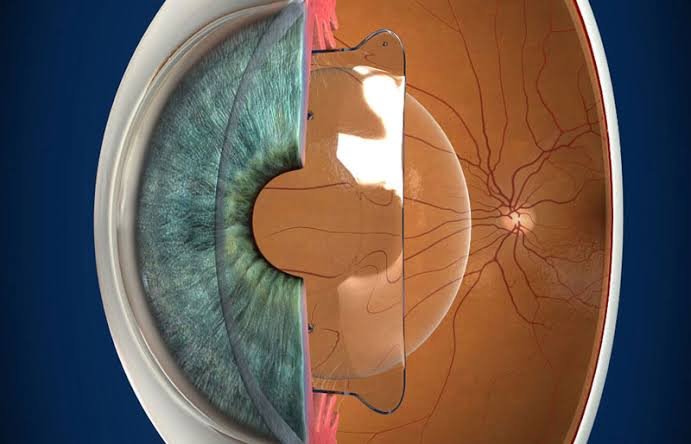
ICL (Implantable Collamer Lens) surgery is an advanced vision-correction procedure in which a specially designed lens is placed inside the eye to correct refractive errors such as myopia (near-sightedness) and, in selected cases, astigmatism. Unlike LASIK, ICL surgery does not involve removing corneal tissue. The lens is implanted inside the eye, behind the iris and in front of the natural crystalline lens, to help provide clear vision.
At Aurus Eye Hospital, Vile Parle West, Mumbai, we offer detailed evaluation and personalised assessment to determine whether ICL surgery is an appropriate option for your eyes and visual needs.
Who Can Benefit from ICL Surgery?
ICL may be considered for individuals who:
1. Have moderate to high myopia (near-sightedness).
2. Have certain types of astigmatism that can be corrected with a toric ICL.
3. Have thin corneas or corneal characteristics that make laser vision correction less suitable.
4. Are not ideal candidates for LASIK or other corneal refractive procedures.
5. Prefer a vision-correction option that does not involve removal of corneal tissue.
Not everyone is suitable for ICL surgery. A comprehensive eye examination and detailed measurements are essential before recommending the procedure.
Is ICL Surgery Safe?
ICL surgery is an established and generally safe vision-correction procedure when performed in appropriately selected patients, with accurate measurements, suitable lens selection and proper postoperative monitoring.
However, like every intraocular procedure, ICL surgery has potential risks. These may include:
1. Increased eye pressure
2. Inflammation
3. Cataract formation (almost negligible with newer designs)
4. Changes in corneal endothelial cell count or problems related to lens sizing and positioning.
One of the most important factors in ICL surgery is choosing the correct lens size for the individual eye.
An incorrectly sized lens may sit too close to the natural lens or may have excessive clearance within the eye. This can increase the risk of complications.
Why Are Detailed Measurements Important Before ICL Surgery?
ICL is not a one-size-fits-all procedure. Every eye has unique anatomical dimensions, and the implanted lens must be selected accordingly.
At Aurus Eye Hospital, we place particular emphasis on detailed preoperative assessment and accurate measurements before recommending ICL surgery.
Our evaluation may include:
1. Detailed refractive assessment to determine the power of the lens required.
2. Measurement of anterior chamber depth and other relevant anatomical dimensions.
3. Assessment of corneal parameters.
4. Evaluation of corneal endothelial cell count.
5. Measurement of eye pressure.
6. Retinal examination and other investigations (e.g. Gonioscopy) as clinically indicated.
These measurements help us assess suitability and select an appropriate ICL size and power for your eye.
At Aurus, we take extra care with these measurements because choosing the right lens size is an important part of achieving a safe and satisfactory surgical outcome.
How Is ICL Surgery Performed?
ICL surgery is generally performed as a short, planned procedure under topical anaesthesia.
Preoperative assessment: Your eye is examined and detailed measurements are taken to determine suitability and lens specifications.
Lens preparation: The customised ICL is selected based on your refractive power and eye measurements.
Lens implantation: The folded lens is inserted through a small incision and carefully positioned inside the eye, behind the iris.
Postoperative assessment: Your eye pressure, lens position and overall eye health are checked after surgery.
The procedure is usually performed as day-care surgery, with postoperative instructions and follow-up visits to monitor recovery.
Both ICL and LASIK are procedures used to correct refractive errors, but they work differently.
ICL Surgery vs LASIK
| Feature | ICL Surgery | LASIK |
|---|---|---|
| How it works | A lens is implanted inside the eye | Corneal tissue is reshaped using a laser |
| Corneal tissue removal | No | Yes |
| Suitable for | Selected patients, including many with higher myopia | Patients meeting corneal and refractive criteria |
| Lens / cornea | ICL lens is placed in front of the Natural Crystalline Lens of the eye | Cornea is reshaped |
| Preoperative assessment | Requires detailed intraocular measurements | Requires detailed corneal evaluation |
The choice of procedure depends on individual eye measurements, refractive error and overall eye health.
The choice between LASIK and ICL depends on your prescription, corneal thickness and shape, eye anatomy, and overall eye health. A detailed evaluation helps determine the most appropriate option.
Recovery after ICL Surgery
Most patients experience improvement in vision relatively soon after surgery, although the recovery experience varies.
After surgery, you will be advised to:
-Use prescribed eye drops as directed.
-Avoid rubbing or pressing on the operated eye.
-Avoid swimming and activities that may expose the eye to contamination during the advised recovery period.
-Attend scheduled follow-up examinations.
-Contact your ophthalmologist if you experience significant pain, sudden reduction in vision, increasing redness or other concerning symptoms.
-Regular postoperative monitoring helps assess eye pressure, lens position and overall eye health.
Why Choose Aurus Eye Hospital for ICL Surgery in Mumbai?
At Aurus Eye Hospital, Vile Parle West, we believe that successful refractive surgery begins with careful patient selection and detailed evaluation. Our approach includes:
1. Comprehensive refractive and ocular assessment.
2. Detailed biometric measurements for appropriate ICL sizing.
3. Individualised lens selection based on eye anatomy and visual requirements.
4. Discussion of available treatment options, benefits and potential risks.
5. Structured postoperative care and monitoring.
Our aim is to recommend the procedure that is most appropriate for your eyes, rather than a one-size-fits-all approach to vision correction.
Frequently Asked Questions
1. Is ICL surgery painful
ICL surgery is generally performed under topical anaesthesia, so significant pain during the procedure is uncommon. Some patients may experience mild irritation or discomfort afterwards.
2. Is ICL Surgery better than LASIK?
Neither procedure is universally better. ICL may be suitable for certain patients with higher myopia, thin corneas or other factors that make LASIK less suitable. The choice depends on individual eye measurements and clinical findings.
3. Can ICL correct High Myopia?
Yes. ICL is an option for correcting moderate to high myopia in appropriately selected patients. The available lens power and individual eye characteristics determine suitability.
4. Can ICL cause Complications?
Although ICL surgery is generally safe in appropriately selected patients, complications can occur. Incorrect lens sizing may contribute to problems such as inadequate or excessive lens clearance, increased eye pressure or contact with the natural lens. Detailed preoperative measurements and postoperative monitoring are important to minimise these risks.
5. Is the ICL Lens Permanent?
ICL is designed to remain inside the eye for long-term vision correction. However, it can be surgically removed or exchanged if medically required. It does not prevent age-related changes in the natural lens or the need for future eye care.
6. How do I know if I am suitable for ICL Surgery?
You need a comprehensive eye examination, including refraction, corneal assessment, anterior chamber measurements and other investigations as indicated. Your ophthalmologist can then determine whether ICL is appropriate for you.
Book an ICL Surgery Evaluation at Aurus Eye Hospital
Considering ICL surgery for myopia or astigmatism? A detailed eye evaluation can help determine whether you are a suitable candidate and which vision-correction option is appropriate for your eyes.
Aurus Eye Hospital
B1 & B2, Ground Floor, Tulsi Villa, Bajaj Road, Vile Parle West, Mumbai.
Call / WhatsApp: 8356905504
Website: www.auruseyehospital.com