
Glaucoma Treatment in Vile Parle
Understanding Glaucoma: Early Detection Can Help Save Your Sight
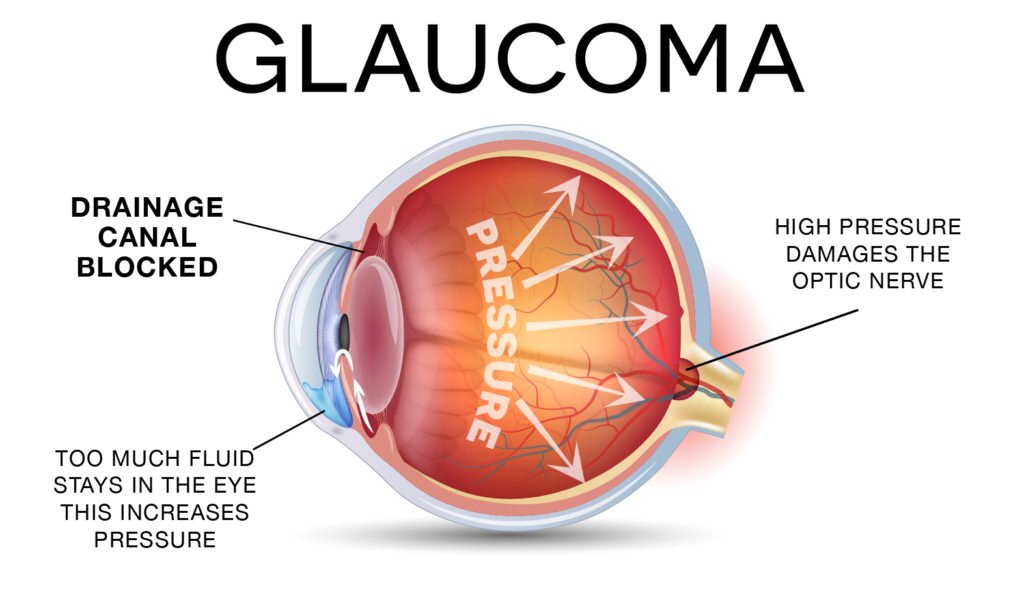
Glaucoma is a group of eye conditions that damage the optic nerve, which carries visual information from the eye to the brain. It is commonly associated with increased pressure inside the eye, although glaucoma can also develop when eye pressure is within the normal range.
Glaucoma is one of the leading causes of irreversible blindness worldwide. What makes it particularly concerning is that it often develops gradually, without noticeable symptoms in its early stages.
At Aurus Eye Hospital, Vile Parle West, Mumbai, we offer comprehensive glaucoma evaluation, diagnosis, treatment and long-term monitoring to help protect your vision.
What Causes Glaucoma?
The optic nerve is responsible for transmitting visual signals to the brain. In glaucoma, progressive damage to the optic nerve leads to gradual loss of vision.
The eye continuously produces a clear fluid called aqueous humour, which normally drains through a specialised drainage pathway. If this fluid does not drain adequately, pressure inside the eye may increase.
Raised intraocular pressure is an important risk factor for glaucoma. However, not everyone with high eye pressure develops glaucoma, and some people develop glaucoma despite having normal eye pressure.
Types of Glaucoma
1. Primary Open-Angle Glaucoma
This is the most common type of glaucoma. It develops gradually when the eye’s drainage system becomes less efficient. Eye pressure may increase slowly, and peripheral vision is usually affected first.
Most patients do not experience symptoms until significant damage has occurred.
2. Angle-Closure Glaucoma
This occurs when the drainage angle of the eye becomes narrow or blocked, preventing the normal outflow of aqueous humour.
It can develop gradually or present as an acute attack. Acute angle-closure glaucoma is an eye emergency and requires immediate medical attention.
Symptoms may include:
Sudden severe eye pain.
Redness of the eye.
Blurred vision.
Halos around lights.
Headache, nausea or vomiting.
3. Normal-Tension Glaucoma
In this type, optic nerve damage occurs even though the measured eye pressure is within the normal range. Other factors, including the optic nerve’s susceptibility and blood supply, may play a role.
4. Secondary Glaucoma
Glaucoma can sometimes develop due to another eye condition, injury, inflammation, certain medications or previous eye surgery.
5. Congenital and Childhood Glaucoma
Some children are born with glaucoma or develop it during childhood. Early diagnosis and treatment are particularly important to protect the developing visual system.
Who Is at Risk of Developing Glaucoma?
Although glaucoma can affect anyone, certain factors increase the risk:
Age above 40 years, with risk increasing further with age.
Family history of glaucoma.
High eye pressure.
High myopia or certain other refractive errors.
Diabetes and certain systemic or vascular risk factors.
Previous eye injury or inflammation.
Long-term use of steroid eye drops or other steroid medications.
Thin central corneal thickness.
If you have a family history of glaucoma or other risk factors, regular comprehensive eye examinations are important even if your vision appears normal.
What Are the Symptoms of Glaucoma?
Glaucoma is often called the silent thief of sight because early disease may not cause any noticeable symptoms.
As the disease progresses, patients may develop:
Gradual loss of peripheral vision.
Difficulty noticing objects approaching from the sides.
Tunnel vision in advanced stages.
Difficulty with certain daily activities due to reduced visual field.
Importantly, central vision may remain relatively good even when significant peripheral vision loss has occurred.
Do not wait for symptoms to appear before getting your eyes examined.
How Is Glaucoma Diagnosed?
A routine eye examination alone may not be sufficient to rule out glaucoma. Diagnosis requires a combination of clinical examination and specialised investigations.
At Aurus Eye Hospital, glaucoma evaluation may include:
1. Intraocular Pressure Measurement
Tonometry measures the pressure inside the eye. Raised eye pressure is an important risk factor, but a normal reading does not rule out glaucoma.
2. Optic Nerve Examination
The optic nerve is examined to identify changes in its appearance that may indicate glaucomatous damage.
3. Optical Coherence Tomography (OCT)
OCT provides detailed cross-sectional images of the optic nerve and retinal nerve fibre layer. It helps detect structural changes and monitor disease progression.
4. Visual Field Testing
Perimetry assesses peripheral vision and identifies areas of visual field loss caused by glaucoma.
5. Gonioscopy
This examination helps assess the drainage angle of the eye and distinguish between open-angle and angle-closure mechanisms.
6. Corneal Thickness
Pachymetry measures central corneal thickness, which helps interpret eye pressure readings and assess glaucoma risk. Not every patient requires every test. The investigations are selected based on clinical findings and individual risk factors.
How Is Glaucoma Treated?
Glaucoma-related optic nerve damage is generally irreversible. Treatment aims to lower eye pressure, slow or prevent further damage and preserve the vision that remains.
The appropriate treatment depends on the type of glaucoma, disease severity, eye pressure, optic nerve status and individual patient factors.
1. Glaucoma Eye Drops
Eye drops are commonly used as the first line of treatment. They work by either reducing the production of aqueous humour or improving its drainage.
Regular use is essential. Patients should not stop or change their glaucoma medication without consulting their ophthalmologist.
2. Laser Treatment
Laser procedures may be recommended in selected patients.
Examples include:
Selective Laser Trabeculoplasty (SLT) for certain patients with open-angle glaucoma.
Laser Peripheral Iridotomy (LPI) for patients with narrow angles or angle-closure risk.
The choice of laser procedure depends on the type and mechanism of glaucoma.
3. Glaucoma Surgery
Surgery may be advised when eye pressure remains uncontrolled despite medications or laser treatment, or when the disease requires a more definitive intervention.
Procedures may include trabeculectomy, glaucoma drainage devices and other appropriate surgical techniques.
Can Glaucoma Be Cured?
Glaucoma cannot currently be cured, and existing optic nerve damage cannot generally be reversed.
However, with early diagnosis, appropriate treatment and regular monitoring, further damage can often be slowed significantly.
The goal is to preserve useful vision and maintain quality of life over the long term.
Why Is Regular Glaucoma Monitoring Important?
Glaucoma is a chronic condition that requires lifelong follow-up in most patients.
Even when eye pressure is controlled, the optic nerve and visual field need to be monitored to identify any progression.
Your ophthalmologist may recommend periodic:
Eye pressure measurements.
OCT scans of the optic nerve and retinal nerve fibre layer.
Visual field tests.
Optic nerve examinations.
The frequency of follow-up depends on the severity and stability of the disease.
Why Choose Aurus Eye Hospital for Glaucoma Care in Mumbai?
At Aurus Eye Hospital, Vile Parle West, we believe that effective glaucoma care begins with early detection, accurate diagnosis and consistent follow-up.
Our approach focuses on:
Comprehensive eye examinations and glaucoma risk assessment.
Detailed evaluation of the optic nerve.
OCT-based structural assessment where indicated.
Visual field evaluation and disease monitoring.
Individualised treatment plans.
Long-term follow-up and patient education.
Our aim is to help patients understand their condition, adhere to treatment and protect their vision through timely and appropriate care.
Frequently Asked Questions About Glaucoma
1. Can glaucoma occur without high eye pressure?
Yes. Normal-tension glaucoma can cause optic nerve damage even when measured eye pressure is within the statistically normal range.
2. Can glaucoma cause blindness?
Yes. Untreated or inadequately controlled glaucoma can cause permanent vision loss and blindness. Early diagnosis and appropriate treatment can help reduce this risk.
3. At what age should I get tested for glaucoma?
Glaucoma risk increases with age, particularly after 40. People with a family history or other risk factors may need earlier and more frequent evaluation.
4. Is glaucoma hereditary?
Family history is an important risk factor. Having a close relative with glaucoma increases your risk, so regular eye examinations are advisable.
5. Can glaucoma be treated with eye drops alone?
Many patients can manage glaucoma with eye drops, but some may require laser treatment or surgery. Treatment is individualised according to disease severity and response.
6. Can lost vision due to glaucoma be restored?
Unfortunately, vision lost due to glaucomatous optic nerve damage cannot generally be restored. Treatment aims to prevent or slow further loss.
7. Should I continue glaucoma drops if I have no symptoms?
Yes. Glaucoma often progresses silently. Do not discontinue prescribed eye drops simply because your vision feels normal or your eye pressure has improved.
Book a Glaucoma Evaluation at Aurus Eye Hospital
Glaucoma can progress without warning signs. If you have a family history of glaucoma, raised eye pressure or other risk factors, consider a comprehensive glaucoma evaluation.
Aurus Eye Hospital
B1 & B2, Ground Floor, Tulsi Villa, Bajaj Road, Vile Parle West, Mumbai.
Call / WhatsApp: 8356905504
Website: www.auruseyehospital.com
Protect your vision. Get your eyes examined regularly.