Lasik and Refractive Surgery
LASIK and Refractive Surgery in Vile Parle, Mumbai
What is Refractive Surgery?
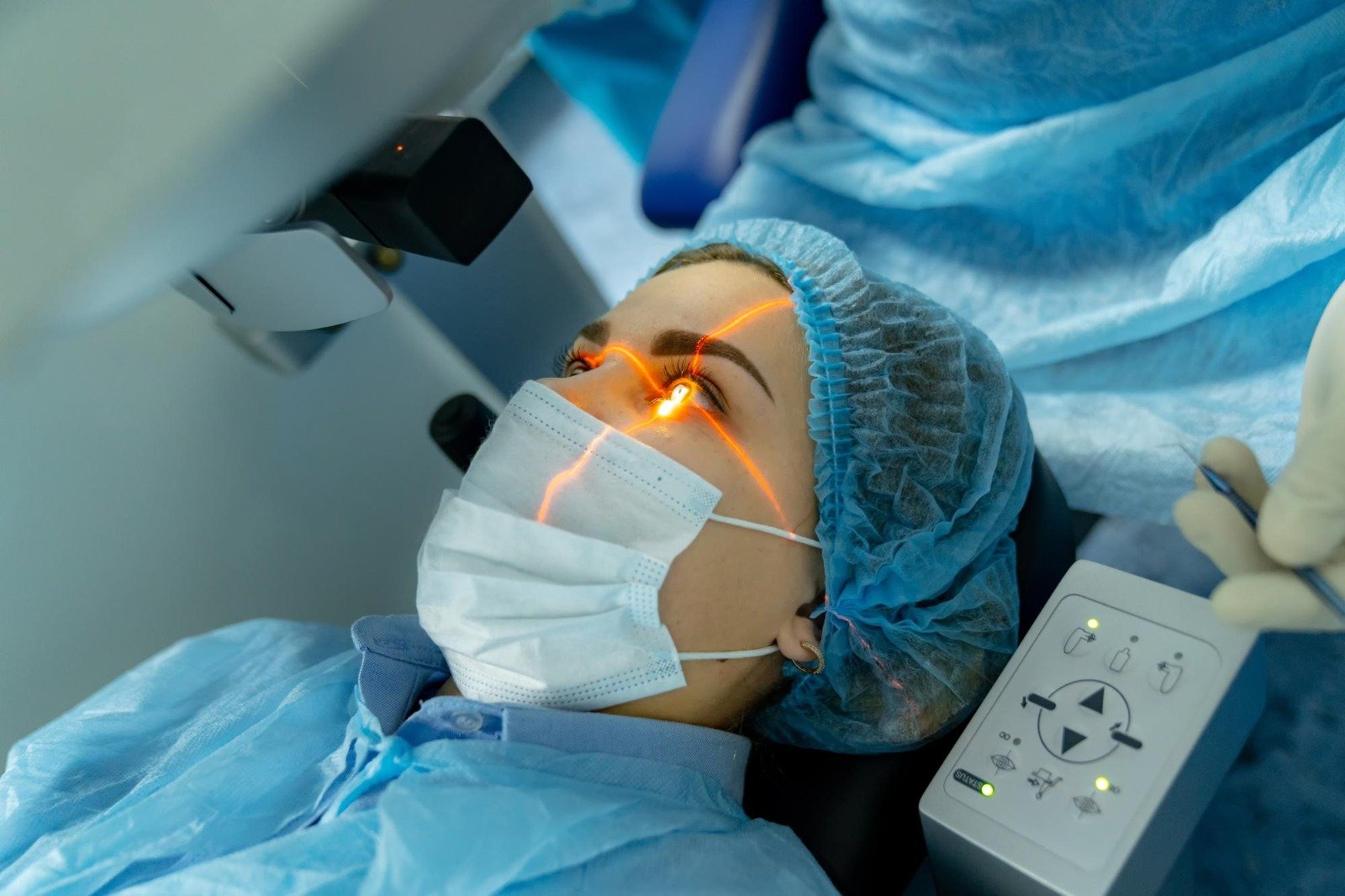
Refractive surgery is a group of procedures designed to reduce dependence on spectacles or contact lenses by correcting the eye's focusing power. It can help people with myopia (short-sightedness), hyperopia (long-sightedness) and astigmatism.
At Aurus Eye Hospital, Vile Parle West, Mumbai, refractive surgery begins with a comprehensive eye evaluation to assess the prescription, corneal shape and thickness, tear film, retinal health and overall suitability for treatment. Based on these findings, suitable options such as LASIK, Contoura Vision, SMILE, PRK or ICL may be discussed.
The aim is to recommend a procedure that is appropriate for the individual's eye characteristics, visual requirements and lifestyle rather than choosing a technique based on popularity alone.
Refractive surgery corrects the way light is focused by the eye, helping images fall more accurately on the retina.It is commonly considered by people who:Depend on spectacles or contact lenses for everyday activities.Find glasses inconvenient during sports, exercise or travel.Experience difficulty wearing contact lenses comfortably.Wish to reduce their dependence on corrective eyewear.Refractive procedures can correct different types of refractive errors:
Myopia: Distant objects appear blurred.
Hyperopia: Near vision may be difficult, and distance vision can also be affected.
Astigmatism: Uneven curvature of the cornea or lens causes blurred or distorted vision.
What Are the Different Types of Refractive Surgery?
The choice of procedure depends on the refractive error, corneal measurements, eye health and individual visual requirements.
1. LASIK (Laser-Assisted In Situ Keratomileusis)
is a laser vision correction procedure in which a thin corneal flap is created. An excimer laser then reshapes the underlying corneal tissue to correct the refractive error.
What patients should know:
It is commonly used to correct myopia, hyperopia and astigmatism within suitable treatment ranges. Visual recovery is generally quick. Most patients can resume many routine activities within a short period, following their surgeon's advice. Temporary dryness, glare or fluctuating vision may occur during recovery.
2. Contoura Vision – Topography-Guided LASIK
Contoura Vision is a form of topography-guided laser vision correction. It uses detailed mapping of the corneal surface to guide treatment planning.Unlike conventional treatment planning based primarily on spectacle prescription, corneal topography provides additional information about the shape and irregularities of the cornea.
Potential advantages include:
Individualised treatment planning based on corneal topography. Correction of refractive error along with selected corneal surface irregularities. Potential improvement in visual quality in appropriately selected patients. The suitability and expected benefit depend on corneal measurements and individual eye characteristics.
3. SMILE and SMILE Pro
SMILE (Small Incision Lenticule Extraction) is a minimally invasive laser vision correction procedure. A femtosecond laser creates a small disc-shaped piece of tissue, called a lenticule, within the cornea. This is removed through a small incision to change the corneal shape and correct the refractive error. SMILE Pro is a newer generation of the procedure using an advanced femtosecond laser platform.
What patients should know:
No large corneal flap is created.The procedure uses a small incision.It may be suitable for selected patients with myopia and astigmatism.Visual recovery and dryness patterns can differ from LASIK.
Not every refractive error or corneal profile is suitable for SMILE.
4. PRK (Photorefractive Keratectomy)
PRK is a surface laser procedure in which the outermost layer of the cornea is removed or displaced before laser reshaping.It may be considered in selected patients, including some who are not suitable for LASIK because of corneal characteristics.
What patients should know:
1. No corneal flap is created.
2. Initial recovery is slower than LASIK.
3. Temporary discomfort and blurred vision can occur during early healing.
4. Visual stabilisation takes longer and requires follow-up.
5. ICL (Implantable Collamer Lens)
ICL is different from laser vision correction. Instead of reshaping the cornea, a specially designed lens is implanted inside the eye, behind the iris and in front of the natural crystalline lens.It may be considered for selected patients with higher refractive errors or corneal characteristics that make laser procedures unsuitable.
What patients should know:
The natural crystalline lens is retained. It does not involve removal of corneal tissue. It may be an option for selected patients with high myopia. Detailed evaluation of anterior chamber anatomy, endothelial cell count and other parameters is essential. It is an intraocular surgical procedure and has risks that differ from corneal laser surgery.
LASIK vs SMILE vs PRK vs ICL: Understanding the Differences
Different vision correction procedures use different approaches. Here's a general comparison of the commonly considered options.
| Feature | LASIK | SMILE | PRK | ICL |
|---|---|---|---|---|
| Treatment approach | Corneal laser | Corneal laser | Surface laser | Implantable lens |
| Corneal flap | Yes | No | No | No |
| Corneal tissue removal | Yes | Yes | Yes | No |
| Early visual recovery | Generally quick | Generally quick, may vary | Slower | Generally quick, may vary |
| Commonly considered for | Myopia, hyperopia, astigmatism | Myopia, selected astigmatism | Myopia, selected other errors | Myopia and selected refractive errors |
| Intraocular surgery | No | No | No | Yes |
Important: This table provides a general comparison. The exact range of treatable prescriptions and suitability varies by procedure, technology and individual eye measurements. A detailed eye examination is required to determine the appropriate option.
Who Is a Suitable Candidate for LASIK or Refractive Surgery?
Not everyone who wears spectacles is automatically suitable for laser vision correction. A detailed evaluation is necessary before recommending any procedure.
Factors considered include:
Age: The prescription should generally have stabilised before surgery. The appropriate age depends on clinical assessment and applicable procedure criteria.
Stable spectacle prescription: Significant recent changes in prescription may require postponing treatment.
Corneal thickness and shape: Adequate corneal tissue and a healthy corneal profile are essential for laser procedures.
Eye health: Conditions affecting the cornea, retina, optic nerve or ocular surface need careful assessment.
Dry eye: Existing dry eye disease may need treatment before considering surgery.
Lifestyle and visual requirements: Occupation, sports, screen use and expectations influence procedure selection.
Certain conditions, such as keratoconus or suspicious corneal topography, may make corneal laser surgery unsuitable.
Pregnancy, breastfeeding and some systemic or ocular conditions may also affect the timing or suitability of surgery.
What Tests Are Required Before Refractive Surgery?
Preoperative evaluation is one of the most important parts of refractive surgery planning. Depending on the individual, investigations may include:
1. Detailed refraction and spectacle power assessment.
2. Corneal topography and tomography.
3. Corneal pachymetry (thickness measurement).
4. Tear film and dry eye evaluation.
5. Pupil assessment.
6. Dilated retinal examination.
7. Intraocular pressure measurement.
Additional tests when clinically indicated.
These investigations help determine whether refractive surgery is appropriate and which procedure may be safest and most suitable.
What Happens During Refractive Surgery?
Most corneal laser procedures are performed as day-care procedures using topical anaesthetic eye drops. The patient is positioned under the laser system, and the treatment is performed according to the planned correction. The procedure itself is usually brief, although the overall visit includes preparation and postoperative assessment. ICL surgery is different because it involves implantation of a lens inside the eye and requires a separate surgical plan. After surgery, patients receive prescribed eye drops and instructions regarding eye protection, hygiene, activity and follow-up visits.
Recovery After Refractive Surgery
Recovery varies according to the procedure and individual healing response.
LASIK: Functional vision often improves quickly, although fluctuations and dryness can persist during healing.
SMILE: Vision improves over the initial days, with continued stabilisation thereafter.
PRK: The surface of the cornea needs time to heal, so early discomfort and slower visual recovery are expected.
ICL: Many patients experience relatively quick visual recovery, but postoperative monitoring is important because it is an intraocular procedure.
Patients should avoid rubbing their eyes and follow all postoperative instructions. Follow-up visits are essential to monitor healing and visual outcomes.
Are There Any Risks or Side Effects?
Refractive surgery is generally safe in appropriately selected patients, but no procedure is completely free of risk. Possible side effects and complications include:
1. Dry eyes or temporary discomfort.
2. Glare, halos or difficulty with night vision.
3. Fluctuating or residual refractive error.
4. Under-correction or over-correction.
5. Infection or inflammation.
6. Corneal complications, including ectasia in susceptible eyes.
Need for additional treatment in selected cases.
The type and likelihood of complications differ between procedures. A detailed preoperative assessment helps identify risk factors and guide appropriate treatment selection.
Frequently Asked Questions
1. Is LASIK permanent?
LASIK permanently reshapes the cornea, but it cannot prevent age-related changes in the eye. Some patients may experience changes in their prescription over time, and almost everyone eventually develops age-related difficulty with near vision (presbyopia).
2. Is LASIK painful?
Anaesthetic eye drops are used during the procedure. Patients may experience pressure or mild discomfort. Temporary irritation, watering or light sensitivity can occur afterwards.
3. How soon can I return to work after LASIK?
Many patients resume routine work within a short period, depending on visual recovery and the nature of their work. Your surgeon will advise when it is appropriate to return to specific activities.
4. Is SMILE better than LASIK?
Neither procedure is universally better. SMILE and LASIK have different advantages, limitations and suitability criteria. The choice depends on corneal characteristics, refractive error and individual requirements.
5. Can thin corneas undergo LASIK?
Thin corneas may make LASIK unsuitable because sufficient residual corneal tissue must remain after treatment. Some patients may be evaluated for alternative options such as PRK or ICL, depending on their complete eye assessment.
6. Can LASIK correct both near and distance vision?
LASIK can correct certain refractive errors, but it does not prevent presbyopia, the age-related loss of near focusing ability. Special strategies such as monovision may be considered in selected patients after appropriate assessment.
7. Is ICL safer than LASIK?
Both procedures have different risk profiles. LASIK involves reshaping the cornea, whereas ICL involves placing a lens inside the eye. Neither is universally safer; suitability and risk depend on individual anatomy and eye health.
8. Can I undergo LASIK if I have dry eyes?
Dry eye disease should be evaluated and managed before refractive surgery. Significant or uncontrolled dry eye may affect suitability and postoperative comfort.
9. Will I never need spectacles again after refractive surgery?
Refractive surgery can reduce dependence on spectacles, but it cannot guarantee lifelong freedom from glasses. Residual refractive error, age-related presbyopia and other eye conditions may still require corrective lenses.
Refractive Surgery at Aurus Eye Hospital, Vile Parle West, Mumbai
At Aurus Eye Hospital, refractive surgery planning focuses on detailed evaluation, appropriate procedure selection and individual visual requirements.
Whether you are considering LASIK, Contoura Vision, SMILE, PRK or ICL, the first step is a comprehensive refractive assessment to understand which options may be suitable for your eyes.
Considering freedom from spectacles? Schedule a refractive surgery evaluation at Aurus Eye Hospital.
Aurus Eye Hospital
B1 & B2, Ground Floor, Tulsi Villa, Bajaj Road, Vile Parle West, Mumbai.
Phone: 8356905504
Refractive surgery suitability and outcomes vary between individuals. A comprehensive eye examination and consultation with an ophthalmologist are necessary before deciding on treatment.