
What Does a Comprehensive Eye Check-up Really Mean?
A comprehensive eye check-up is not simply about finding out whether you need spectacles. It is a systematic evaluation of your vision and overall eye health, designed around your individual needs. At Aurus Eye Hospital, we believe that a comprehensive eye examination is not defined by a fixed number of tests or a standard package. It is defined by whether the right assessments are performed for the individual. For some people, a vision assessment and refraction may be sufficient for their immediate concern. Others may require evaluation of binocular vision, eye pressure, the retina, optic nerve or ocular surface. People with certain medical conditions, previous eye surgeries or long-term medication use may need additional specialised investigations.
The objective is not to perform the maximum number of tests. It is to perform the appropriate tests for each individual.
Why is an annual comprehensive eye check-up important?
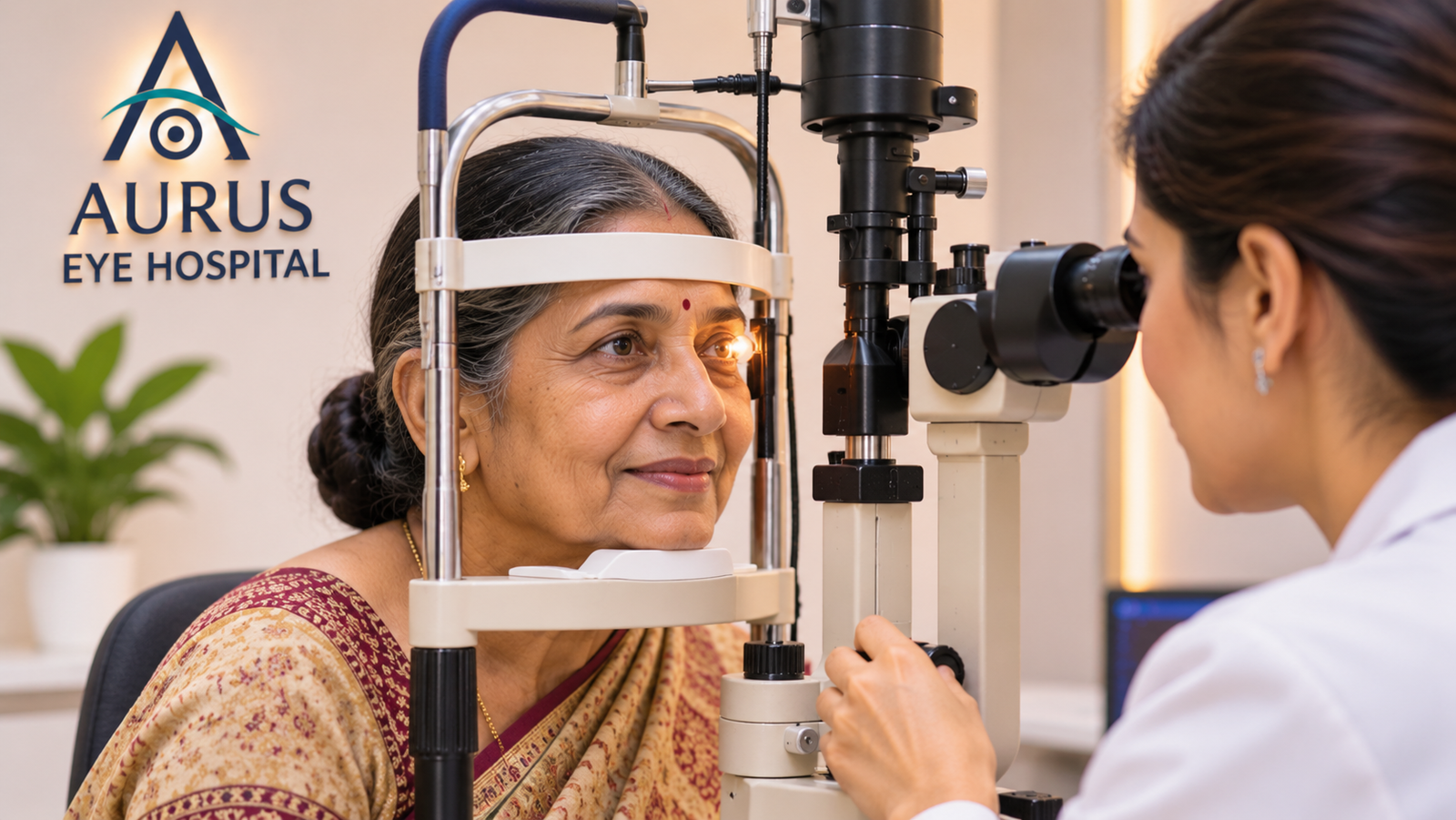
Everyone should undergo a comprehensive eye examination at least once a year, even if they feel their vision is perfectly normal.Good vision does not always mean healthy eyes. Several eye conditions can develop without noticeable symptoms in their early stages. An examination can help identify these changes before they begin affecting vision.The nature of the examination depends on your age, symptoms, medical history, family history, previous eye procedures and medication use.
Your eye examination should be tailored to your needs
Different individuals may require different assessments:
1. . If you are short-sighted (myopic)
People with myopia, particularly moderate to high myopia, have an increased risk of retinal complications. A dilated retinal examination is important to assess the peripheral retina and identify problems such as retinal thinning, lattice degeneration or retinal breaks.
2. If you have diabetes
Diabetic retinopathy can develop even when your vision appears normal. Regular dilated retinal examinations are important to detect early retinal changes and determine whether further investigations or treatment are required.
3. If you have hypertension
High blood pressure can affect the blood vessels in the retina. Retinal evaluation may help identify changes associated with systemic hypertension, particularly in people with longstanding or poorly controlled hypertension
4. If you have undergone LASIK or other corneal refractive surgery
Periodic evaluation of the cornea may be recommended. Corneal topography or tomography can help assess corneal shape and identify changes that may require further attention
5. If you have glaucoma or are a glaucoma suspect.
Glaucoma can cause progressive optic nerve damage, often without early symptoms. Monitoring may include intraocular pressure measurement, optic nerve assessment, OCT imaging and visual field testing, depending on the individual’s condition
.6. If you are on long-term systemic steroids
Steroid use can increase the risk of raised eye pressure, steroid-induced glaucoma and cataract formation. Periodic eye examinations are important, with the frequency of monitoring guided by the type, dose, duration and route of steroid exposure.
7. If you take certain long-term medications
Some medications can affect specific structures of the eye and require specialised screening.For example, people taking hydroxychloroquine may require retinal screening with tests such as OCT and visual field assessment, according to current screening recommendations and individual risk factors.Certain GLP-1 receptor agonist medications also warrant attention to diabetic eye health, particularly in patients with pre-existing diabetic retinopathy. The need for additional assessment depends on the patient’s diabetes status, retinal findings and clinical circumstances.Your ophthalmologist will determine which tests are appropriate based on your medication history and individual risk profile.
What does a comprehensive annual eye examination include?
A comprehensive annual eye examination may involve the following assessments, depending on individual requirements:
1. Vision Assessment
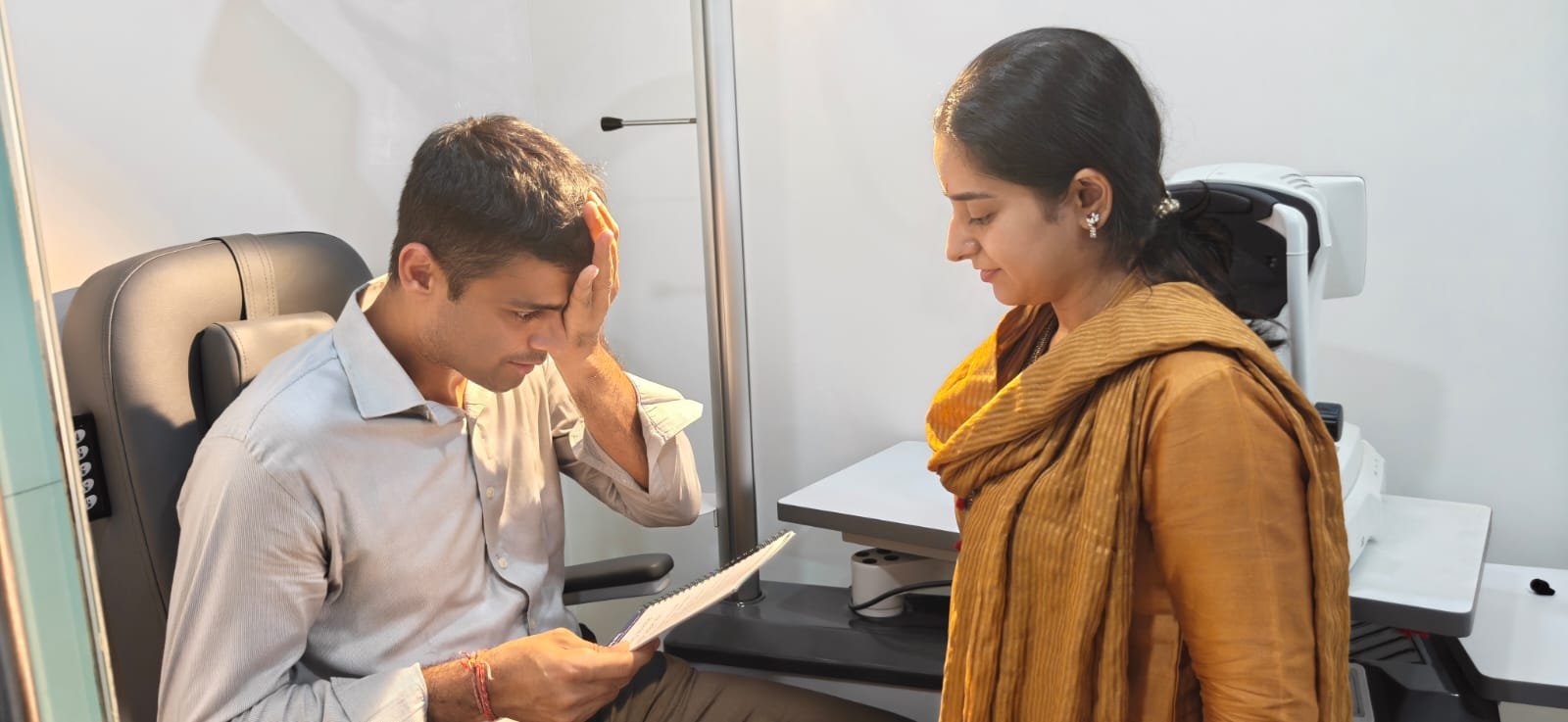
Visual acuity testing evaluates how clearly you can see at distance and near. It helps identify changes in vision and provides a baseline of comparison during future examinations.
2. Refraction
Refraction determines your spectacle power and identifies refractive errors such as:
Myopia (short-sightedness)
Hypermetropia (long-sightedness)
Astigmatism
Presbyopia (age-related difficulty with near vision)
It also helps assess whether your existing spectacle prescription needs an update.
3. Eye pressure assessment
Intraocular pressure (IOP) measurement is an important component of glaucoma evaluation.However, eye pressure alone cannot diagnose or rule out glaucoma. It must be interpreted along with optic nerve findings and other relevant investigations.
4. Dilated retinal examination
Eye drops are used to dilate the pupils, allowing a detailed examination of the retina and optic nerve.This helps assess the back of the eye and identify retinal or optic nerve abnormalities that may not be apparent from routine vision testing.It is particularly important in individuals with diabetes, moderate to high myopia, certain visual symptoms or other relevant risk factors.
5. Ocular surface examination
The ocular surface includes the tear film, cornea, conjunctiva and eyelids. Evaluation of these structures helps identify dry eye disease and other ocular surface conditions that may cause:
1. Burning or irritation
2. Redness
3. Excessive watering
4. Foreign body sensation
5. Fluctuating vision
6. Discomfort during prolonged screen use
Ocular surface health is also important when planning procedures such as cataract surgery and refractive surgery.
Additional tests that may be recommended
Depending on your examination findings and risk factors, your ophthalmologist may recommend additional investigations.These may include:
1. Binocular vision assessment: Evaluates how both eyes work together, including eye alignment and coordination.
2. OCT (Optical Coherence Tomography): Provides detailed cross-sectional images of the retina or optic nerve.
3. Visual field testing: Assesses peripheral vision and helps detect and monitor conditions such as glaucoma.
4. Corneal topography or tomography: Maps the shape and curvature of the cornea, particularly useful in refractive surgery assessment and corneal disorders.
5. Fundus photography: Provides photographic documentation of the retina and optic nerve.
6. Specialised medication-related screening: Additional investigations may be required for people taking medications that can affect ocular structures.
Not everyone requires all these investigations. They are recommended when clinically indicated.
Who should get a comprehensive eye check-up?
An annual eye examination is useful for adults and children, with the type and frequency of assessment tailored to age and individual risk.In particular, periodic eye evaluations are important for:
1. People who wear spectacles or contact lenses
2. Individuals with diabetes or hypertension
3. People with a family history of glaucoma or other eye diseases
4. Individuals with high myopia
5. People who have undergone LASIK or other eye surgeries
6.Patients taking long-term medications that may affect the eyes
7. Individuals experiencing blurred vision, headaches, eye strain or fluctuating vision
7. People with an existing eye condition requiring monitoring
Children also need age-appropriate eye examinations to assess visual development, refractive errors, eye alignment and other problems that may affect learning and development.
Comprehensive Eye Check-up at Aurus Eye Hospital, Vile Parle West
At Aurus Eye Hospital, Vile Parle West, Mumbai, an eye examination is guided by your individual visual needs, medical history and clinical findings.
Our approach focuses on evaluating both how well you see and the health of your eyes. Based on the findings, the ophthalmologist will advise whether further investigations, treatment or periodic monitoring are required.A comprehensive eye check-up is not just a spectacle prescription. It is an opportunity to understand your eye health and identify potential problems early.
Your eyes deserve an examination that is appropriate for you.
Frequently Asked Questionselected according to individual requirements.
1. Is a spectacle check the same as a comprehensive eye check-up?
No. A spectacle check primarily evaluates refractive error and determines your spectacle prescription. A comprehensive eye examination may include additional assessments of eye pressure, retina, optic nerve and ocular surface, depending on individual needs.
2. How often should I get my eyes checked?
An annual comprehensive eye examination is a useful general recommendation. However, people with existing eye conditions, diabetes, glaucoma or specific medication-related risks may require more frequent monitoring.
3. Does every eye check-up require pupil dilation?
Not necessarily. Dilation is recommended based on age, symptoms, risk factors and examination findings. It is particularly important when a detailed retinal examination is required.
4. Can an eye check-up detect glaucoma?
An eye examination can identify features suggestive of glaucoma. Assessment may include eye pressure measurement, optic nerve examination, OCT and visual field testing. No single test can reliably rule out glaucoma.
5. Do I need an eye check-up if I can see clearly?
Yes. Several eye conditions can develop without affecting vision in their early stages. A periodic examination can help identify problems before noticeable symptoms develop.
6. Do people with diabetes need a dilated retinal examination?
Type your paragraph here
Yes. People with diabetes should undergo regular retinal screening, even if their vision is normal. The frequency of follow-up depends on the retinal findings and the advice of the treating ophthalmologist.
7. What tests are included in a comprehensive eye check-up?
There is no single fixed list applicable to everyone. The examination may include vision assessment, refraction, eye pressure measurement, dilated retinal examination and ocular surface evaluation. Additional tests are selected according to individual requirements.
Visit Aurus Eye Hospital, Vile Parle West, Mumbai
Aurus Eye Hospital
B1 & B2, Ground Floor, Tulsi Villa CHS, Bajaj Road, Vile Parle West, Mumbai – 400056
Appointments: +91 8356905504
.